Showing posts with label oaks. Show all posts

Sunday, September 24, 2023

Galls at Stulsaft Park, Redwood City, CA

I don't think I'd ever walked around Stulsaft Park, a decent-sized city park on both sides of the Arroyo Ojo de Agua creek in suburban Redwood City. It has several varieties of oaks growing together along the steep slopes. This time of year, oaks come with galls in various shapes, colors, and textures. Wonderful life!


Sunday, May 9, 2021

The crazy reproductive life of gall-inducing wasps

"Cynipid wasps are responsible for the most extreme galls in color and shape. Galls that look like miniature stars, sea urchins, golf balls, cups, saucers, clubs, teardrops, goblets, and bow ties are among the fascinating shapes that stir the imagination.... 

"Cynipids typically exhibit an ALTERNATION OF GENERATIONS, called HETEROGONY, with a spring sexual generation emerging from a different gall (often from a different plant organ) than the summer-fall generation of unisexual females (agamic generation). The latter females overwinter in diapause as prepupae (usually in the galls) and then pupate and emerge in spring, timed in harmony with the development of the preferred plant organs. Eggs produced and deposited by these females result in larvae and galls of the spring sexual generation. This alternation of generations is rather rare in the animal kingdom but also known in aphids and rotifers. This interesting alternation of reproductive modes confused early entomologists, as the alternating generations of the same species induced galls with different morphologies. This led researchers to believe the different galls belonged to separate species or even other genera."

Ronald A. Russo, Plant Galls of the Western United States, p. 48

Sunday, January 24, 2021

Busy acorn woodpeckers

 Grant Park, east of San Jose.


Saturday, October 17, 2020

East Bay native plant nurseries

I was in the market for a Quercus kelloggii (California black oak) to replace a walnut we had to take down, and discovered it in the inventories of two native plant nurseries I had not visited before: Oaktown Native Plant Nursery, in Berkeley, and East Bay Wilds, in the Fruitvale district of Oakland. Both are excellent native plant nurseries, each with a solid selection of some of the standards, plus some unusual plants you don't find very often, and friendly and knowledgeable staff. At Oaktown I picked up a few things, including several small pots of Tellima grandiflora, a plant I love to find growing trailside– we'll see if it can take my suburban conditions and neglect. Oaktown's oaks were not what I was looking for, so I headed to Oakland! East Bay Wilds had several very nice specimens of black oak, and the one that called out to me was raised from a Castro Valley acorn. The person who helped me seemed a little reluctant to part with that lovely little tree. $25 for a healthy tree in a 5-gallon pot... the price is right. Cash or check only at East Bay Wilds, but the corner store nearby has an ATM.

Go native!

Tuesday, June 9, 2020

Bye bye "yuta-yippus"

That's how my son Aidan pronounced "eucalyptus" when he was very little. It has its place– in Australia!– but in the Bay Area it is an unwelcome invasive monoculture. Over the years, every time I hiked up the hill in lovely Wunderlich County Park and passed by the thick grove of these untidy trees, I would say to myself, I wish somebody would cut those damn things down... and lo, somebody did! May they in due time be replaced with the live oak, black oak, tanoak, madrone, and creekbed-dwelling redwood and bay laurel that populate these biodiverse foothills.


Wednesday, October 16, 2019

Little things

I took this blurry close-up of a valley oak leaf with my phone the other day in Arastradero Preserve... the little red pimple- or volcano-shaped galls caught my eye, although they knocked off so easily I wonder if they were not some kind of scale insect. At any rate, I missed the handsome jumping spider entirely, until I cropped the picture...


Monday, July 24, 2017

Gall

On my black oak. One of many varieties found in our great state.
California’s 22 species of oaks... are known to support over 200 species of cynipid gall wasps, more recorded species than North Africa, Europe, and Asia combined.

Tuesday, April 25, 2017

Henry Coe

It's partly the sheer scale of northern California's largest state park that sets the place apart. From your trailhead at the civilized western edge, your calves burn as you ascend to the closest major ridge– in my case, Willson Peak. The views open up, first westward, then north and south, and finally eastward, where the park extends, rolling ridge beyond rolling ridge, as far as the eye can see. It's little wonder that you encounter more backpackers than day hikers: it's a place to get lost for a few days, especially on a temperate overcast spring weekend, with the deciduous oaks leafing out and wildflowers competing with the emerald European grasses.

Oaks and grass dominate... and what oaks! Blue, black, valley, and live oaks, some of them commingling and presumably hybridizing. Atop Willson Peak, the bluegreen serpentine outcropping is a striking dead zone, surrounded at the margins by the hardy native flowers that have evolved to handle the chemicals. There are also some nice lichens.


Friday, October 23, 2015

The gall!

On scrub oak in Foothills Park...


Sunday, May 31, 2015

The Oak Project

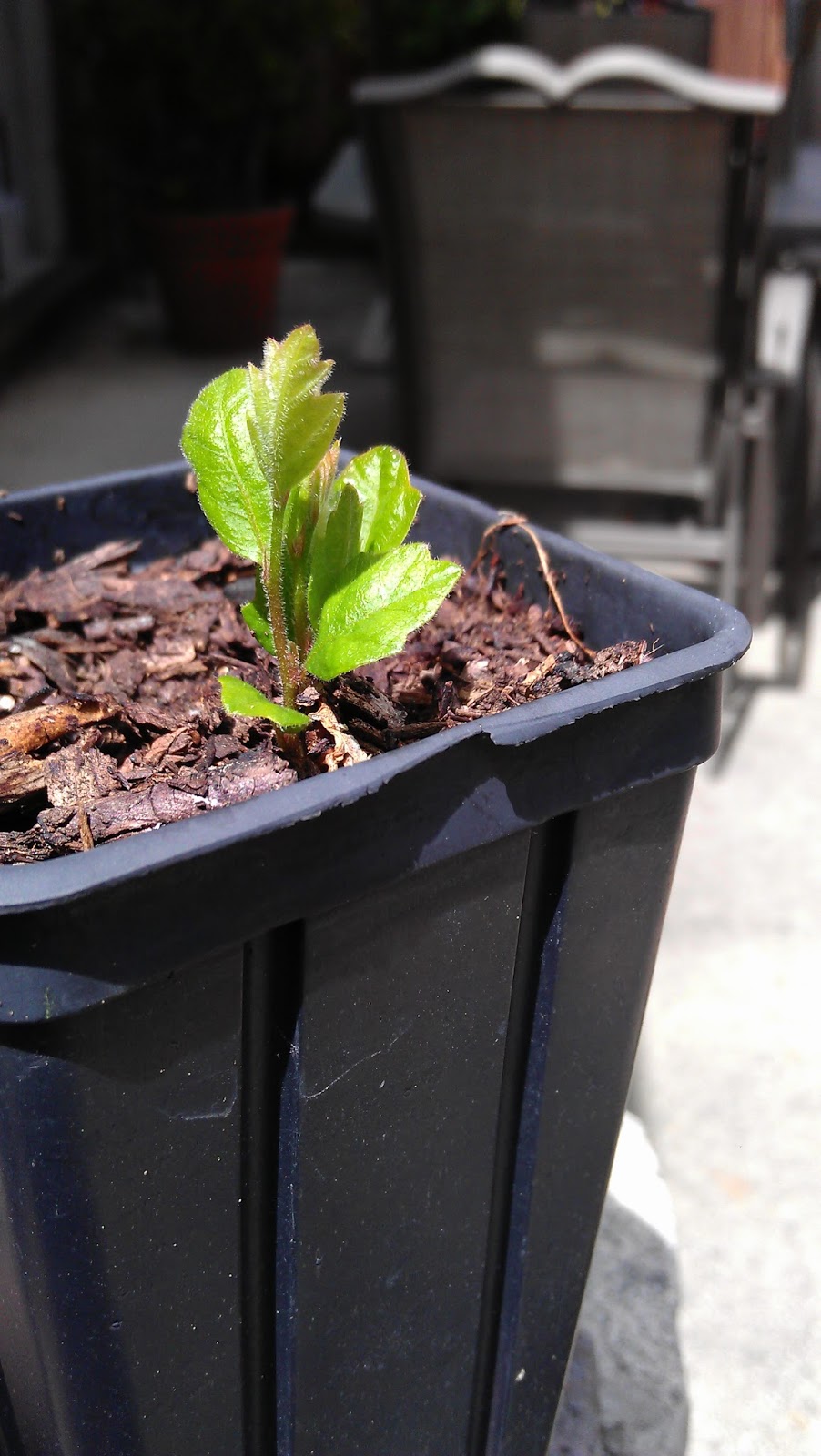
This little fellow is a brand-new baby valley oak, Quercus lobata, which I started from an acorn. The valley oak is the largest North American oak, and in my opinion overall the most beautiful, with its vertically striated bark, broad twisting and gnarled branch architecture, and pleasingly rounded lobed leaves. Unlike our other mighty California oak, the live oak, lobata is deciduous, and every spring even the most massive giant is covered in the glowing new greenery of this photo. This particular acorn spent several months mulling it over before deciding to hoist its shoot and make a go of it. My success rate with home-grown oaks is poor, but I sure like the looks of this one.


Tuesday, November 25, 2014

Henry Coe State Park

You seek solitude? California's second largest state park, Henry Coe is only an hour's drive from the heart of Silicon Valley, but on a Monday in November, you might as well be in the Trinity wilderness or the middle of the Mojave. It's not a spectacular landscape, but spectacular is not why you are here. As you tramp up and down the folded ridges, you picture a California before the settlers, before even the internet. The tree-sized manzanitas, with their voluptuous whorls and knots; a mint blossom that has no idea what month it is; a varied thrush alighting in a black oak, its leaves muted gold. Before the settlers, these Eurasian grasses would all have been forbs and native bunch grasses, like the patch of blue-green California fescue that has somehow reclaimed the top of Middle Ridge. You will return.


Monday, November 10, 2014

Pulgas Ridge

Dry as a bone. But the slanting afternoon light works wonders on the thickets of poison oak canes, blue oak bark... the rat nests and orb webs.


Saturday, September 27, 2014

Acorns

Every acorn is a beautiful thing, but the acorns of the valley oak (Quercus lobata) are particularly lovely, with their graceful elongated olive shape and variable coloration. Not to mention that each one has the potential to grow up to be California's most beautiful tree.


Sunday, May 4, 2014

Orestimba Wilderness hike

Orestimba is a particularly remote section of the enormous Henry Coe State Park, which lies east of Morgan Hill, CA. Henry Coe is not far from Silicon Valley as the crow flies, but in some ways it might as well be the Yukon Territory. Public roads barely pierce the perimeter, and visitors are relatively few. Our guide, Ron Erskine, seems to know this country as if it were the city block he grew up on, even though the park encompasses nearly 90,000 acres. (Kudos to Bay Nature, the fine magazine and nonprofit that sponsored the walk.)

These hills, part of the Diablo Range, have a specific muted color palette that is difficult for a snapshooter to capture. So I abandoned color, and focused on the textures of the photogenic blue oaks...


with a return to color for portraits of a couple of native reptiles...