I don't think I'd ever walked around Stulsaft Park, a decent-sized city park on both sides of the Arroyo Ojo de Agua creek in suburban Redwood City. It has several varieties of oaks growing together along the steep slopes. This time of year, oaks come with galls in various shapes, colors, and textures. Wonderful life!
Sunday, September 24, 2023
Friday, May 14, 2021
Monday, February 15, 2021
Springtime in Foothills Park
While the rest of the country shivers and digs out, we are enjoying what amounts to early spring in the Bay Area: The magnolias and pear trees are in bloom, if you like that kind of thing (I do!), and up in the foothills the earliest bloomers are out, including the uncommon western leatherwood, Henderson's shooting stars, warrior's plume, and milk maids (easy to take for granted). The buckeye leaves have sprung too– flowers to follow soon. Ferns in abundance, greening up as best they can in this year's dry wet season.
Saturday, October 17, 2020
East Bay native plant nurseries
I was in the market for a Quercus kelloggii (California black oak) to replace a walnut we had to take down, and discovered it in the inventories of two native plant nurseries I had not visited before: Oaktown Native Plant Nursery, in Berkeley, and East Bay Wilds, in the Fruitvale district of Oakland. Both are excellent native plant nurseries, each with a solid selection of some of the standards, plus some unusual plants you don't find very often, and friendly and knowledgeable staff. At Oaktown I picked up a few things, including several small pots of Tellima grandiflora, a plant I love to find growing trailside– we'll see if it can take my suburban conditions and neglect. Oaktown's oaks were not what I was looking for, so I headed to Oakland! East Bay Wilds had several very nice specimens of black oak, and the one that called out to me was raised from a Castro Valley acorn. The person who helped me seemed a little reluctant to part with that lovely little tree. $25 for a healthy tree in a 5-gallon pot... the price is right. Cash or check only at East Bay Wilds, but the corner store nearby has an ATM.
Go native!
Friday, October 9, 2020
October on the Hamm's Gulch Trail
Windy Hill OSP. Despite the incredibly dry time of year, the buckeyes are covered in lush moss, thanks to the old Douglas-firs, which harvest the fog near the ridge and create their own moist microclimate. Lovely.
Tuesday, June 9, 2020
Bye bye "yuta-yippus"
Saturday, May 9, 2020
Our buckeye
Thursday, May 7, 2020
California state animals and plants: proposed updates
I nominate the dark-eyed junco for new state bird. It is found everywhere you go– city, suburbs, farmland, chaparral, forests– and is even more ubiquitous than the admittedly appealing California quail, the current office holder. If it weren't so damn common, we'd find the junco more lovely and charming. Now it is true that our subspecies of dark-eyed junco used to be called the Oregon junco, which may be off-putting to some chauvinistic Californians. But Oregon's state bird is the western meadowlark; I see no big problem here. We'd also be the first state to have a variety of sparrow as state bird.
The current state reptile is the desert tortoise. I've never seen one outside a zoo, and frankly, there's a better option here: the western fence lizard. Not only are they everywhere, brightening your day as they scurry off the trail or fencepost right in front of you, but they offer all of us protection against Lyme disease by killing the bacteria when ticks feed on their blood. Well, it's a nice story anyway, even if it ain't necessarily so. The Pacific rattlesnake would be an excellent alternative.
The incumbent state tree is the coast redwood. I like the redwood just fine, but overall it is not a particularly beautiful tree, selected presumably for its age and stature. Its cousin, the giant sequoia, is a much more charismatic tree, but its range is very restricted and it may not survive climate change.
My nomination is the valley oak, a glorious tree: the largest North American oak, it is endemic to California and widespread in the central valley. Leave it to Wikipedia to offer us a poetic description: "The branches have an irregular, spreading and arching appearance that produce a profound leafless silhouette in the clear winter sky. During Autumn leaves turn a yellow to light orange color but become brown during mid to late fall. In advancing age the branches assume a drooping characteristic. Its pewter-colored rippled bark adds to the attractive aesthetic of this species." Exactly so.
The state mammal, the grizzly bear, is extinct in California, which makes it a sad joke, and, Cal Bears notwithstanding, it ought to be replaced. The black bear would be a good choice, or of course the mule deer, tule elk, coyote, or mountain lion. These are all excellent, charismatic critters, but a little unoriginal. I would go with the dusky-footed woodrat, an industrious if retiring animal, and super-cute.
Tuesday, August 21, 2018
Saturday, January 6, 2018
After the rain
Two varieties of Hericium, on nearby logs... H. erinaceus...
... and H. coralloides...
Moss, yerba buena, and miner's lettuce among downed bay laurels...
Moss (Dendroalsia?) likes the weather...
Lichens are likin' it too...

Silk tassel (Garrya elliptica), peak bloom... up close the flower looks like a chain of lacy bells...
Something yellow and slimy...

And some wee club-like fungi, sharing space with some wee ripe puffballs...

Tuesday, August 1, 2017
Pygmy forests of Mendocino
Drainage is poor at best on these stairs and plants sit in a bath of their own tannins and acids for much of the wet season. Plant communities on this terrace have reacted to limited root mobility and acidic soil by evolving stunted forms.There are a couple of nice examples of pygmy forests near the town of Mendocino. For a great introduction to the landscape that gives rise to these things, the Ecological Staircase Trail in Jug Handle State Natural Reserve is a must. This beautiful trail starts on a bluff overlooking the Pacific, crosses Highway 1, and descends into the lush riparian habitat of the Jughandle Creek bed. From there one ascends a series of the ecological staircases through beautiful coniferous forests, finally arriving at the pygmy forest, where a short boardwalk takes you through the thicket of stunted trees and shrubs. (Another, short stroll through a pygmy forest can be found at the Van Damme State Park. The forest is easily accessible from Airport Road.)
Some of the trees in these "forests" might be only an inch in diameter and little taller than head height, yet a century old. Bizarre and remarkable places, they were for me strangely reminiscent of the Alakai Swamp on Kauai, as well as some scrubby areas of central Florida, both otherworldly plantscapes.
Pygmy forests do not lend themselves to photography: Context is everything. But here are a few shots, including an example of the beautiful Fort Bragg Manzanita (Arctostaphylos nummularia) and the reindeer lichen (Cladonia portentosa ssp. pacifica) one finds growing on the ground under the scrub.
Monday, January 2, 2017
Feeling, fast and slow
Which is not to say Wohleben is necessarily wrong about tree feelings. He has spent a lifetime with trees, and he shares some wisdom about them in his book. For me there are two key takeaways. First, trees are social organisms. Not just in the sense that they live in groups and offer obvious mutual support as windbreaks and soil stabilizers. They also communicate, through commingling of roots and chemical signals sent across dense networks of fungal filaments– the "wood-wide web." And they share resources, in what any economist would see as risk-pooling arrangements. Of course, they are also in competition– Wohleben is especially good in describing the struggle between species in the process of forest succession, where scrappy, fast-growing pioneer varieties pounce on openings created by fire, flood, or avalanche, but inevitably are overshadowed by their more patient rivals.
Second, trees experience the world in a completely different time scale, which comes from the fact of being rooted, and the extraordinary lifespans of many species. The realization of the transitory nature of a human life compared with trees is one of the things that makes it so humbling to stand in a grove of old-growth redwoods. Fantasy filmmakers like to scare you with the trees that "come to life": think Oz, Lord of the Rings, and Harry Potter. Real trees are actually quite active and mobile in their fashion– they just take their time about it. Mobility, in fact, occurs only on an intergenerational time scale.
The alien slowness of tree experience raises difficulties for thinking about tree sentience. I never really believed all that woo-woo business about plants having feelings, singing to your houseplants to make them happy, etc. As someone who loves forests and trees, I value trees deeply for what I understand them to be: beautiful, fascinating, and utilitarian organisms. In the past I would have welcomed Wohleben's approach only as a useful metaphor– a plea for treating trees with respect, but not to be taken literally.
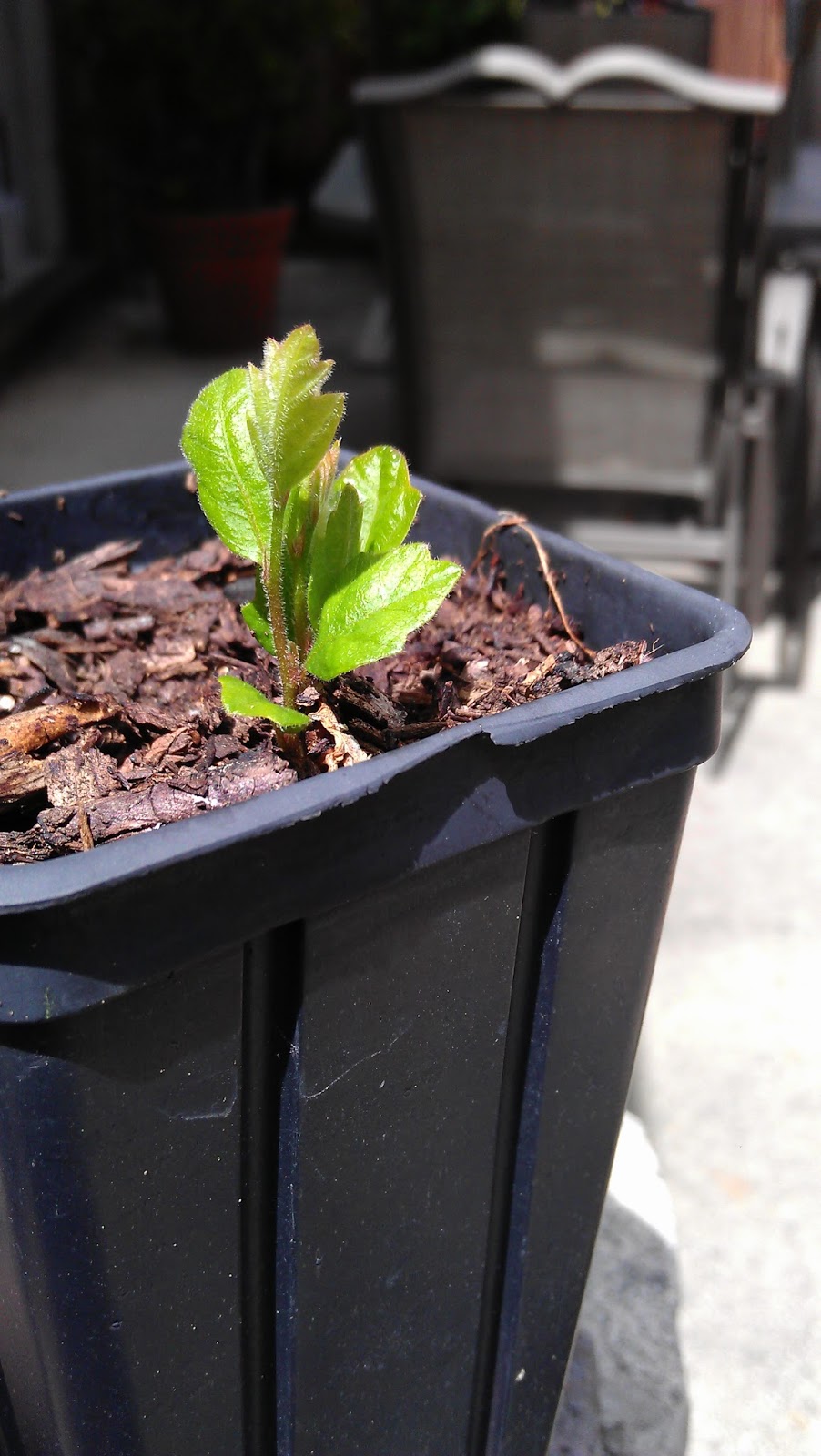
Nowadays, I'm less confident in my skepticism. We take seriously that humans are animals, all the way deep down, that other animals can have cognition and consciousness, and that the bright lines dividing organisms one from another are a lot blurrier than we thought: 90% of our cells, after all, are "non-human." So who is to say that there is not some very slow-moving form of consciousness embodied in the complex network of roots, filaments, and soil microorganisms of the forest? Perhaps a consciousness that can suffer?
Wohleben is not a great writer, and his book begins to plod within the first hundred pages. But I'd recommend the first half, at least. I'm not yet sure how it will change the way I interact with trees, but I think it will.
Friday, December 30, 2016
Palo Alto in winter
Friday, November 6, 2015
Madrone
Sunday, May 31, 2015
The Oak Project
Wednesday, April 29, 2015
Very big trees
Calaveras Big Trees SP preserves a couple of fine stands of giant sequoia. After I arrived in the late afternoon I took the longer hike to the more pristine South Grove, home to the park's largest sequoias. I had the grove entirely to myself. Ditto for my early morning stroll through the more accessible North Grove, adjacent to the park's headquarters and visitors center. In other words: If you have some desire to experience these extraordinary places in complete solitude, go on a weekday off season. I would not characterize myself as a spiritual person, but wonderment is something I am capable of, and you get it here.
Calaveras was privately owned for a period, and the dudes who ran the operation committed some "atrocities." They felled one of the largest specimens and made the resulting log into a bar and bowling alley. When you see the stump today there is some wonderment at how much trouble they went to in the mid 1800s to cut down such a behemoth. Essentially they attacked the thing with an auger, repeatedly drilling holes until they had hollowed out a slice, and it toppled.
Another giant(ess), the Mother of the Forest, some 2500+ years old, was stripped of its bark, which killed the tree in short order. The corpse is still standing. The bark was shipped around to various exhibitions, where it was reassembled to provide onlookers some idea of the enormity of these trees. Such pillaging is unimaginable to us now, but I have mixed feelings. Humans are collectively, for better or worse, the planet's stewards, and they can have no desire to steward what they cannot imagine or conceive. Aside from pure preservation from extinction, this is our best defense of zoos. If a traveling exhibition inspired people to value these trees and their habitat, well, perhaps the Mother died not in vain.
I have never seen a photo of a sequoia that does justice to the experience of the mammoth ancient thing in person, so I'll stick to the sideshow. Late afternoon and early morning brought slanting light, which illuminated the blossoming and leafing dogwoods against the dark hulks of the big trees. The bugs were out (photo 3), and with them the birds.
Saturday, March 21, 2015
Saturday, September 27, 2014
Acorns
Friday, December 7, 2012
Uvas Canyon
Uvas is known for its pleasant seasonal waterfalls, but the flora always attract my eye. Here's a typical view from the waterfall loop trail...
Madrone, the most beautiful tree in the world...
Serendipitous oak critter...
The sheer brute force with which a fleshy mushroom can force its way up through the packed earth never ceases to amaze me (a russula, in this instance)...
... or, appear as if dropped by some wayward hiker...
Oysters... tempting, but too pretty (and too high up) to collect...


