
Saturday, October 5, 2019
"Self-defeat" seems like the right term
Once upon a time in America, prosperous rural towns helped lead the revolution in public education and local public goods such as libraries. As the story goes, the United States became a leader in economic growth by way of human capital accumulation because political power was democratic and decentralized; many communities viewed investments in local public goods as a way they could collectively better themselves, and they had the authority and will to collect the necessary tax revenue and make it happen. The eclipse of this collective optimism by selfish pessimism is a tragedy being played out in our country's heartland, as Monica Potts reports in this sad but excellent piece. When and how did this reversal of outlook come about? Then again, as a friend put it, the news is "hopeful too, because as [the] author points out, the number of people with these 'lifestyles' is dwindling...."

Friday, October 4, 2019
The driver is part of the death machine
I found it interesting that in an op-ed entitled "Cars Are Death Machines. Self-Driving Tech Won’t Change That." one can search for the word "alcohol" and get zero hits. "Drunk" gets one, in a photo caption. The CDC estimates that alcohol-impaired crashes account for nearly 30% of traffic fatalities. One could add to that fatalities caused by drowsy or distracted drivers and come up with quite a few unnecessary deaths that could logically be prevented by always alert and sober computer drivers. That seems like a significant improvement over the status quo, if and when it happens.
Tuesday, October 1, 2019
Gene Ammons...
... did not make it to 50 years old, and about ten years of his short life were spent behind bars for narcotics possession. The rest were spent making fantastic music.
Monday, September 23, 2019
Trump and the California clean air waiver
James Sallee has a nice analysis here. Galling as it is to see Trump trying to revoke California's waiver, which allows the state to impose more stringent gas mileage standards than the national, Sallee suggests that the damage was really done when Trump rolled back the national standards imposed by Obama. The reason has to do with the way the federal CAFE standards interact with California's:
The federal greenhouse gas rule for automobiles, called Corporate Average Fuel Economy (CAFE) standards, require automakers to sell vehicles that, on average, have fuel economy above a certain threshold. If California has its own, stricter greenhouse gas rule, the cars sold in California still count as part of the federal fleet under CAFE. This means that every Leaf, Prius and Tesla sold in California improves the industry’s federal average. That enables automakers to sell more Mustangs and Suburbans in the rest of the country, which means that much, if not all, of the greenhouse gas mitigation that takes place in California will be offset by increased emissions throughout the nation.
The application of this so called “waterbed effect” to California fuel economy standards was described elegantly in a paper by Larry Goulder, Mark Jacobsen and Arthur van Benthem back in 2012. They studied the implementation of a California-specific fuel economy rule and concluded that between two-thirds and three-quarters of emissions reductions in California would be offset by increases in other states. In the meantime, the burden of complying with strong regulations would fall on Golden State consumers.At any rate, the issue is now in the courts– of law and of public opinion. The best rule change would follow regime change in the White House.
Sunday, September 22, 2019
Anne B
I recently re-read Wolf Hall and Bring Up the Bodies. Are these now my two favorite books? I think so. And not just because they have added great words like umbles and gralloched to my vocabulary, should I have occasion to use them (though granted that seems unlikely). I could happily turn around and read both books straight through again. Hilary, where is volume 3?
Anne was wearing, that day, rose pink and dove grey. The colours should have had a fresh maidenly charm; but all he could think of were stretched innards, umbles and tripes, grey-pink intestines looped out of a living body; he had a second batch of recalcitrant friars to be dispatched to Tyburn, to be slit up and gralloched by the hangman. They were traitors and deserved the death, but it is a death exceeding most in cruelty. The pearls around her long neck looked to him like little beads of fat, and as she argued she would reach up and tug them; he kept his eyes on her fingertips, nails flashing like tiny knives."– Bring Up the Bodies, p. 38
Game of Fleabags
I watched a bit of the Emmys tonight. I had watched some of the shows that were big winners. Regarding which: I'd give up about two or three seasons of Game of Thrones for an episode or two of Fleabag.
Wednesday, September 11, 2019
Robert Frank, RIP
Gosh, so many obit blog posts lately. Anyway, I own a reprint edition of Frank's The Americans, and I have had the privilege of seeing the actual prints, in book order, in a museum setting. I love his approach to photography, and I love his take on America: critical, leftist, but open-minded and big-hearted, and with a real sense of humor: Why not obscure the faces of your subjects with jingoistic iconography? But when he wanted to capture faces, he didn't mess around...
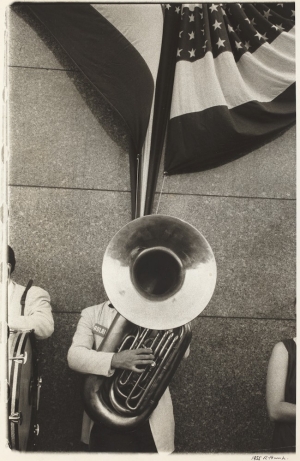
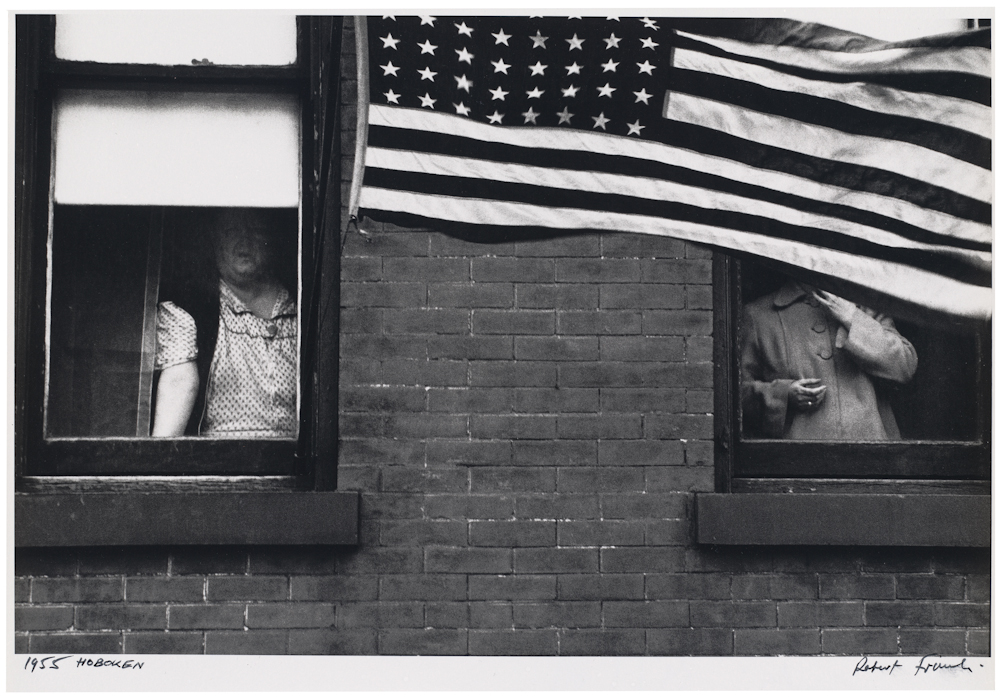
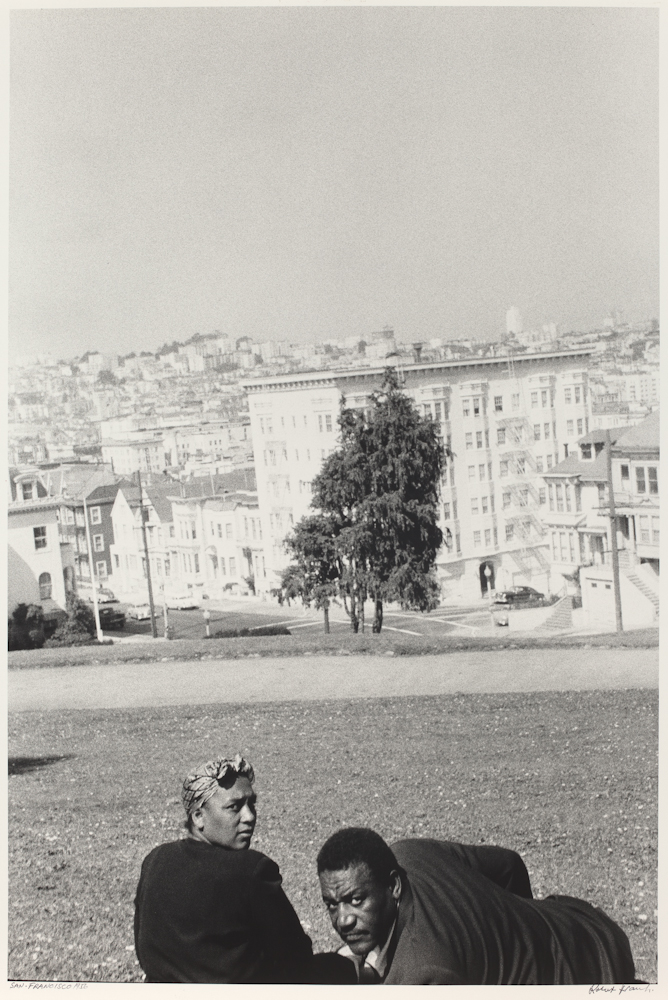
Monday, September 9, 2019
Jimmy Johnson, RIP
Even if you've never heard of him, you've heard him. The Swampers... Art and commerce vs. racism? Sometimes it even worked...
“We didn’t know we were making history,” he said of this interracial affinity in an interview with Southern Rambler magazine. “Black or white, we had the same goal: to cut a hit record.”
After the Rev. Dr. Martin Luther King Jr. was assassinated in 1968, the all-white Muscle Shoals Rhythm Section’s work on soul music sessions for Atlantic and Stax, two of the era’s most influential record companies, was suspended. To Mr. Johnson’s relief, the suspension was temporary.
“We were an integral part of Atlantic and Stax and thought that might be it,” he recalled in that interview. “We were told we wouldn’t be cutting any more black records, and those were our favorite records.”
Subscribe to:
Posts (Atom)